What to Expect From Your First Online Singing Lesson
A first session is a conversation and a chance to hear what you want to work on. It is not an audition, and one short excerpt cannot define your voice.
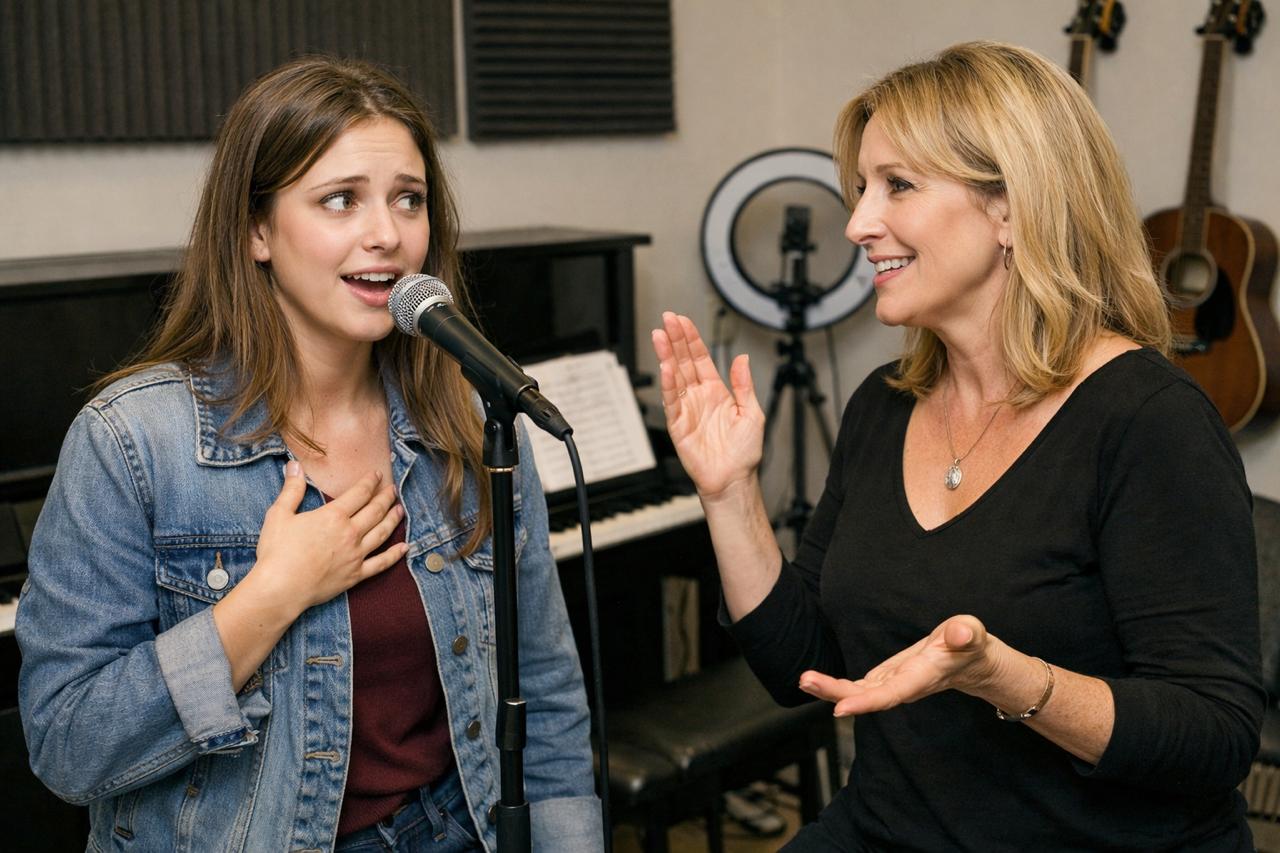
Bring one song and one useful question
Choose a song you know well enough to sing a short section without spending the session finding your place. Bring the title and artist, and, if helpful, a lyric sheet or a note about the verse, chorus or transition you mean. You do not need to prepare a polished performance. The point is to make the musical situation clear enough to discuss together, not to prove that you deserve a lesson.
A useful first-session question names a moment and something you want to understand: “In the chorus of ‘drivers license’ by Olivia Rodrigo, how can I keep the words clear when the melody rises?” is more workable than “How do I become a better singer?” Another example might be asking how to make the first line of ‘As It Was’ by Harry Styles feel connected to the beat without rushing. These examples are starting points, not assumptions about what the coach will prescribe.
Describe what you notice, not what you think is wrong
Try to describe an observation in ordinary language. Perhaps you lose the pitch on a particular note, run out of a comfortable breath before the end of a phrase, or find that the consonants make a line feel hurried. Say when it happens and what you have already tried. “The last word of the chorus feels rushed when I sing with the track” gives the coach something to ask about; diagnosing yourself with a technical label may send the conversation in the wrong direction.
If it is hard to explain, sing or play the short passage and then say what you hoped would happen. The coach may ask you to repeat it, slow the accompaniment, speak the words or compare two ways of approaching it. You can ask what each test is intended to reveal. A useful exchange connects any exercise back to the song rather than leaving you with an unexplained drill.
What to have ready
For an online conversation, have the device you plan to use, a working camera and a microphone that can pick up your speaking voice and a comfortable sung phrase. A stable connection and a place where you can sing without feeling rushed are helpful; special recording equipment is not a stated requirement. Keep the song accessible in whatever format you normally use, and let the coach know if playing it through the call is awkward. Avoid switching between several apps while trying to demonstrate a detail.
Think about how you will hear any accompaniment. If the track is playing through the same device as the call, the coach may hear a different balance from you, so say what you are using and test it rather than assuming it is coming across clearly. A short check before the session can catch basic setup problems. For more detail, see the online lesson tech setup guide; questions about whether a remote format suits a particular task are covered in the online versus in-person comparison.
Expect a conversation, not a verdict
The first session is an opportunity to share a goal, hear what the coach notices and decide whether the proposed next step makes sense to you. It is not an audition or a complete assessment of your voice. A short excerpt cannot establish every factor that might affect a song, and a call is not a studio recording. If the sound is unclear or a task does not work remotely, say so and ask what can reasonably be tested instead.
You can ask what the session can cover, how the coach would know whether an adjustment helped and what remains uncertain. You can also say that a suggestion feels uncomfortable or does not seem connected to your goal. You are allowed to pause, ask for a different explanation or decide that this is not the right fit. No single first meeting can guarantee a particular outcome, and you do not need to commit to a package to have a useful conversation.
Leave with a next question, not a score
Before the conversation ends, try to summarise what you explored in your own words. For example: “I will try the chorus once with the track and once without, and listen for whether the words stay clear.” Ask if that accurately reflects the suggestion, and what to do if the test does not help. That small check turns general feedback into something you can consider in your own practice without pretending one session has settled everything.
Afterwards, note the song section, the idea you tested and any question that remains. If further work is suggested, ask what it involves and how it relates to your aim before deciding. If you are still comparing coaches, the guide to choosing a singing coach offers criteria for evaluating explanation, boundaries and fit.
It can help to bring one piece of context that changes how you approach the song, such as whether you sing it in a different key or use a backing track. Share only what is relevant to the musical question. If you do not know what information matters, say that; the coach can ask follow-up questions rather than expecting you to arrive with a technical explanation. You can also tell them what you would like to leave understanding, even if you are not sure how to reach it yet.
Prepare a focused first session
If you have a specific question before starting, book a paid 30-minute Consultation for £25. It is controlled diagnostic access, not a free taster or discounted lesson.
Request a Consultation