Singing lessons for ADHD and autistic adults
I have ADHD. I know what it is like to be told something useful and lose it before you get home. I know what it is like to be called lazy when you were trying your hardest, and to avoid something you love because the getting started part feels impossible.
So I built my teaching around that, long before I put a name to it. It has turned out to be the most useful thing about the way I teach.
30 minutes. Normally £50. Camera off is fine. No pressure to decide anything.
If any of this sounds familiar
- You have wanted to sing for years and never booked the lesson
- You have had lessons before and could not hold on to what you were told
- You freeze when somebody watches your face
- Instructions in long lists stop making sense halfway through
- You practise brilliantly for nine days and then not at all for a month
- You have been made to feel slow, difficult or not committed enough
- You mask so hard in lessons that you cannot actually learn
None of that means you cannot sing. It usually means nobody taught you in a way your brain could use.
What I do differently
I do not ask you to remember the lesson
After every session you get a link to your own lesson folder. Inside it is the recording, a written summary of what we worked on, and a clear path telling you exactly what to practise next. You are never relying on memory, notes or willpower.
One thing at a time
I will not hand you six corrections at once. We find the one change that matters most today, we make it, and we put it back into your song. The rest can wait.
I change the explanation, not the student
If an explanation does not land, that is my problem to solve, not evidence that you are not getting it. I will explain it a different way, then another, until it makes sense to you. Some people need the feeling, some need the picture, some need the anatomy, some need a daft comparison. All fine.
Your camera can be off
If being watched while you sing is the thing stopping you, turn your camera off. I will turn mine off too. We can work like that for as long as you need.
Interest led, not curriculum led
We work on songs you actually care about. If you have an obsession with one artist, one genre, one particular song, that is fuel, not a distraction. I would rather use it than fight it.
Bad weeks are allowed
If you have not practised, say so and we will get on with the lesson. There is no telling off here. Consistency over months matters far more than any single week.
Plain, direct feedback
I will tell you exactly what I heard, in specific terms, without hinting or softening it into something you have to decode. Direct, never unkind.
Why this makes me a better teacher, not a worse one
I would not teach the way I do if my brain worked like everybody else's.
An ADHD brain does not accept an instruction just because it came from someone qualified. It wants to know why, and it will not engage until the answer makes sense. I spent years on the receiving end of teaching that could not answer that question, so now I never expect a student to take my word for it. I explain what is happening and why the change works, and it sticks because they understand it rather than because they were told.
I also think sideways, constantly. When the textbook explanation fails, I do not repeat it louder. I reach for a picture, a movement, a memory, a daft comparison, whatever gets the idea across to the person actually in front of me. Most singers have been stuck for years on one concept nobody managed to explain in a way they could use. Finding the fifth or sixth way to say it is the part of this job I am best at.
Then there is the noticing. I see the flinch before the difficult note, the shift in the jaw, the half second of hesitation. That is hypervigilance, and in a lot of situations it is exhausting. In a singing lesson it is the single most useful thing about me.
And I understand the gap between wanting something and being able to start. If you have carried a lifetime of being told you are not applying yourself, you do not need another person implying it. You need somebody who knows exactly what that feels like and builds the lesson so it does not happen again.
So when I say I understand students who think differently, I am not being polite about it. It is the reason the teaching works.
The penny drop moment
Almost every student has one. It takes a while, and that while is not a sign of anything being wrong.
One performer I teach was already good and already building a name, singing live rather than miming. Resonance was the concept that would not land. We went round it several times, several different ways, over several lessons.
Then one day he looked up with a huge grin and said, "I get you. I completely get everything you're talking about."
I can always see it arrive. His voice opened after that, and he went from a very good singer to a genuinely remarkable one.
If it has not clicked yet, that does not mean it will not. It means we have not found your version of the explanation.
What to expect, practically
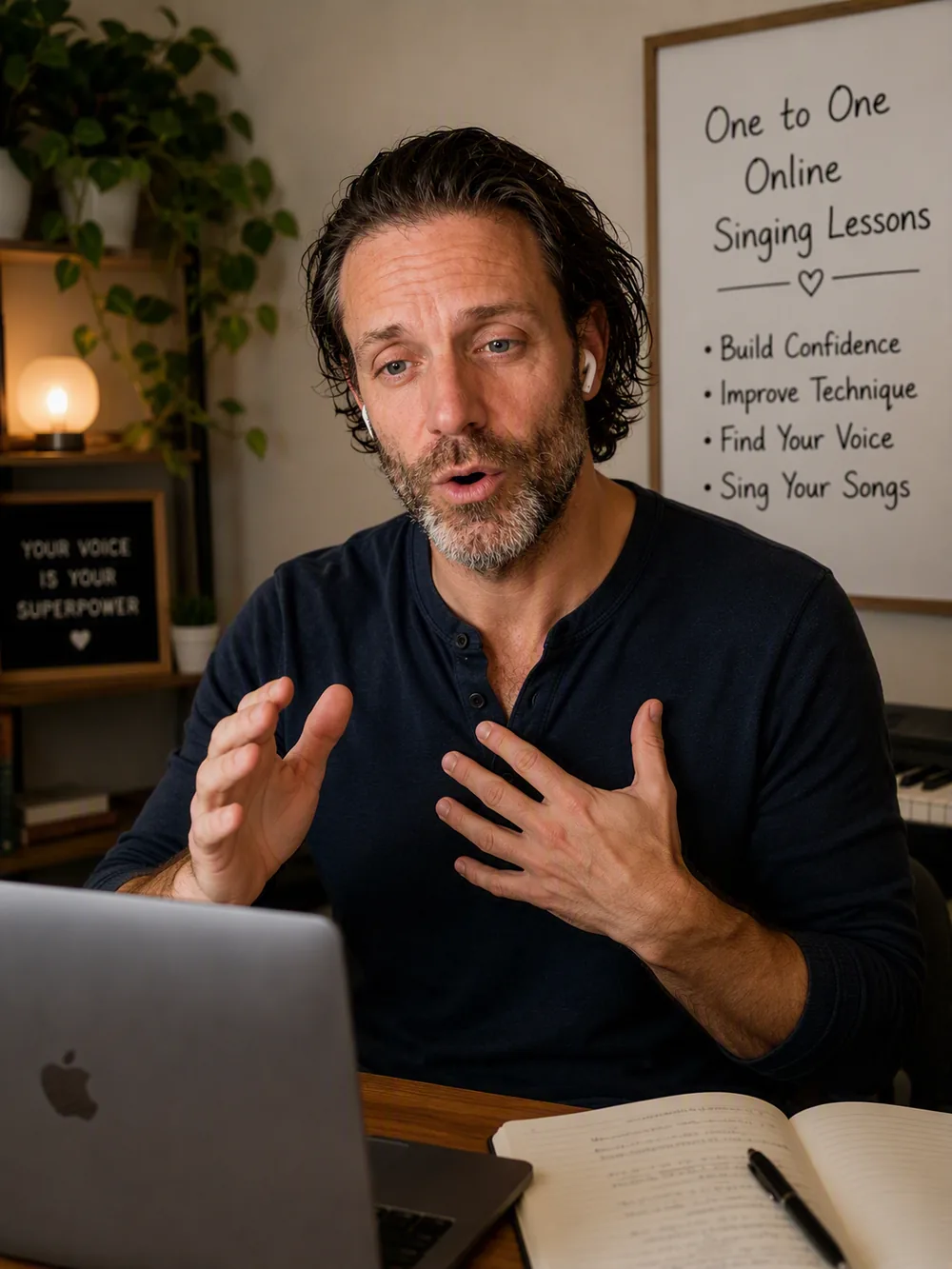
- Lessons are live and one to one on Microsoft Teams, from wherever you are
- You get an email with your Teams link and everything you need, so there is nothing to work out on the day
- Sessions are 60 minutes, and we can change the pace or stop early if you are overloaded
- The 30 minute consultation comes first, so nothing about the real lesson is unfamiliar
- You can ask me to repeat anything, as many times as you like
Being straight with you
I am a singing teacher, not a clinician. I do not diagnose anything, I do not treat anything, and I do not claim that singing fixes anything medical.
What I can tell you is that the way I teach suits a lot of people who have struggled with conventional lessons, and that you will not have to explain yourself here.
Common questions
Do I need a diagnosis?
No. You do not need to tell me anything you do not want to, and you certainly do not need a piece of paper. If you recognise yourself on this page, that is enough.
What if I cannot practise regularly?
Then we plan around that rather than pretending otherwise. Short and irregular still works, and the lesson folder means you can pick up exactly where you left off.
What if I get overwhelmed in the lesson?
Tell me, or just say you need a minute. We slow down, change task or stop. Nothing bad happens.
Is this a special course for neurodivergent people?
No. It is the same live one-to-one coaching everyone gets. This page exists because this is how I teach anyway, and people who need to hear it rarely find out until they have already given up.