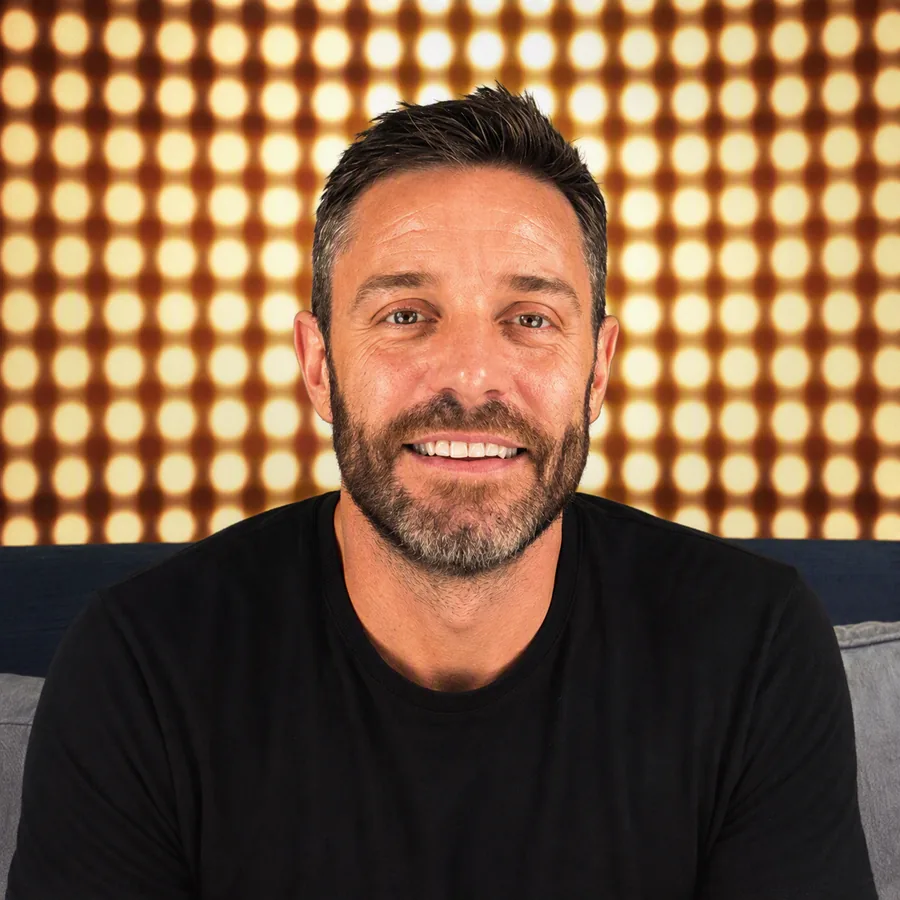
The vocal coach who works out what is actually stopping you
I trained as a singer, not a teacher. I ended up teaching because somebody would not stop asking, and twenty five years later I am still doing it, from a motorhome, with students from complete beginners to artists who fill stadiums.
I never meant to be a singing teacher
I studied at the Academy of Contemporary Music in Guildford and came out with a higher diploma in vocal studies. Teaching was not the plan. The plan was my own music.
To pay for it I was managing a restaurant. One of the regulars kept asking me to teach her husband. I said no. She asked again. I said no again. This went on for a while, and eventually, mostly to stop her asking, I agreed to six lessons over six weeks.
I loved it. I had no idea I would, and no idea I was any good at it, because I had never done it before.
He booked more. Then more again. He went from strength to strength and turned into a genuinely phenomenal singer, and watching that happen was the most satisfying thing I had done. He told people. A London management company got in touch, and I started working with artists they had just signed. The results kept coming, so they passed me to another management company.
Before long I had moved to London and was teaching from a home studio in Camden.
I taught there for years, and at a recording studio who eventually told me I was booking more hours than any other singing teacher they had. Other teachers started saying they had heard about me, which was a strange thing to get used to. Then emails started arriving from well known artists who had been told to find me.
By early 2020 I was opening my own music academy. Premises, first members of staff, my first teachers hired. Then COVID closed all of it.
What COVID actually did
It took the academy away, and it gave me two things instead.
The first was time to work on myself. I had always known I could read people, that I picked up micro expressions in a face that told me far more than anything they said out loud, and that I could connect with someone quickly and sincerely rather than performing it. What I did not know was why. During lockdown I worked out that I have ADHD, and eventually went and got assessed properly. That changed everything, because it explained the thing I had been doing instinctively for twenty years.
The second was that teaching moved online, and it turned out I was better at it there than in a room. So instead of reopening the academy, I moved out of London into a motorhome and told myself I would give it six months.
That was five years ago. I am still in it, still teaching, and the business has never been stronger.
Which is a long way of saying: I did not choose this. Somebody refused to take no for an answer, and it turned out to be the thing I am best at.
What I actually do
I am not really in the business of teaching people to sing. I am in the business of finding out what is in the way and removing it.
Almost every singer who comes to me can already do more than they think. Something is sitting between them and it. Sometimes it is technical, a mouth shape, a vowel, too much pressure in the wrong place. Sometimes it is psychological, the fear that arrives a full bar before the difficult note. Sometimes it is stylistic, or linguistic, or simply that nobody has ever explained the thing in a way their brain could use.
One student arrived with three notes. Not three octaves. Three notes, and that was the whole of his range. I told him honestly that he might be happier playing a different instrument, and he asked me to teach him anyway. We worked intensively and we unlocked the lot. He finished with over three and a half octaves and went on to become a recording artist.
I am not telling you that to boast. I am telling you because I genuinely did not know it was in there either, and I have never made that assumption about anybody since.
My job in the first ten minutes is to work out which of those it is. Get that wrong and you can spend a year doing breathing exercises for a confidence problem. That happens to people constantly, and it is why they arrive at my door convinced they have no talent.
How I teach
Getting into the singer's mind so they can get out of their mind.
Once I know what is actually blocking you, I look for the smallest change that shifts it. Not a programme, not a six week course. One adjustment. The mouth shape, the vowel, the pressure, where you place the sound, what you are picturing, sometimes just permission to stop trying so hard.
Then I explain it. If that explanation does not land, that is my problem to fix, not proof that you are slow. So I explain it another way, and another. Some people need the physical sensation, some need the picture, some need to know exactly what the vocal folds are doing, some need a ridiculous comparison about drinking through a narrow straw. I will keep going until one of them works, because one of them always does.
And then it goes straight back into your song. Not a scale. The actual thing you came here wanting to sing. Exercises are useful, but an exercise that has drifted away from why you walked in is just homework.
What I believe about voices
Every singer has more in them than they realise. I see it well before they do. Most of my job is getting someone to hear what I can already hear.
Technique should not flatten you. Generic voices bore me. A singer can be word perfect, pitch perfect and utterly forgettable, and that is a failure of the teaching, not a triumph of it. The roughness you have been told to hide is often the most interesting thing about your voice.
The note is rarely the problem. Watch someone approach the line they dread and you will see it before you hear it. The face changes. The body braces. They start pushing before they arrive. Fix the anticipation and the note tends to look after itself.
You have to be allowed to be bad. Nobody learns while they are performing for approval. In my lessons you can make a mess of it, and nothing happens.
You get the truth. I will tell you exactly what I heard. Directly, specifically, and without humiliating you. That is the same whether it is your first lesson or a session for a film. Agreeing with someone to keep them comfortable is not coaching, it is customer service.
The professional side
I taught in person in London for more than fifteen years before moving my teaching entirely online, and I now work from a mobile studio, which means I can teach from wherever I happen to be in the world.
Alongside the people who have never had a lesson in their life, my work includes:
English pronunciation for international artists
English diction for performers whose first language is not English. Vowels, consonants, stress and fluency, worked word by word until a line sounds natural rather than learned. Very few coaches do this at the level it is needed for recording, and it is one of the main reasons producers call me.
Film and recording sessions
Working with a director and his artists on the vocals for a film's lead song. Pronunciation, phrasing, delivery, and getting a performance to land in the studio to a deadline.
Stadium and tour preparation
Preparing artists for tours and large venue performances. Stamina, consistency, and making sure a voice survives night after night when thousands of people have paid to be there.
Established international artists
Recording artists and performers with international careers, particularly across Spain and India, plus actors and screen performers required to sing. Some have worked with me for many years.
More about the professional and project work
I do not name clients here. Some of the work is confidential and the rest is not mine to advertise. If you are booking me for a project and need references, ask me directly.
Why I teach the way I do
I have ADHD. I know what it is like to be told something genuinely useful and lose it before you get home, and to be called lazy when you were working harder than anyone in the room.
That is why nothing in my teaching depends on your memory. After every lesson you get a link to your own folder containing the recording, a written summary of what we worked on, and a clear path telling you exactly what to practise next. It stays there for you.
It is also why I never blame a student for not understanding an explanation, and why I will happily find the sixth way to say something. More on how I teach neurodivergent singers
Who I work with
- Complete beginners who have never sung in front of anybody
- Adults coming back to singing after years away
- Developing singers who have hit a wall
- Gigging and working performers
- Recording artists and touring artists
- Actors and screen performers who need to sing for a role
- International artists working in English
Styles: musical theatre, rock, pop, jazz, blues, soul, R&B, funk, gospel and Bollywood.
The beginner and the stadium performer get the same thing from me: undivided attention, honest feedback, and a plan they can actually follow.