Vocal coaching for film, recording and English diction
When a performance has to be right by a fixed date, in front of other people, with money already spent. This is the work I am called in for.
Or contact me directly to discuss a production, session or tour.
English pronunciation for artists singing in a second language
This is the work I am asked for most, and there are very few people doing it properly.
An artist can have a superb voice and still sound wrong in English. It is rarely about accent. It is vowels landing in the wrong place, consonants that arrive too hard or disappear entirely, diphthongs flattened into single sounds, and stress falling on the wrong syllable so the line stops meaning what it should.
I work it word by word. Sometimes syllable by syllable. We find where the mouth is actually going, what it needs to do instead, and then we put the line back together until it sounds like the artist meant it rather than learned it.
The point is never to erase who they are. An artist should still sound like themselves, in English, and still sound like they come from wherever they come from. The aim is that a listener believes the line.
Typically for
- Recording an English language single, album track or film song
- A song being released in more than one language
- Crossover into English speaking markets
- Screen roles where the performance has to be understood as well as heard
Film and recording sessions
I currently work with a film director and his artists on the vocals for a film's lead song.
Session work is a different discipline to teaching. There is a deadline, there are other people in the room with opinions, and the voice has to deliver a specific interpretation rather than simply sing well. The job is to solve what is in front of you, quickly, without damaging the instrument and without unsettling the performer.
That usually means phrasing, diction, emotional intent, and making one take match another. Sometimes it means telling a producer, politely, that what they are asking for is not going to work and offering something that will.
Tour and stadium preparation
Preparing an artist for a tour is mostly about survival and consistency. One brilliant night is not the job. Thirty nights that all sound like the artist people paid to hear is the job.
So we work on stamina, on what to do when the voice is tired on day nine, on warm-ups that are realistic backstage rather than ideal in a studio, on the two or three songs in the set that quietly cost the most, and on what to change when something goes wrong mid-show rather than pushing through it.
Working performers do not have unlimited practice time and I do not pretend otherwise. The coaching has to fit around a real schedule.
Why producers and directors call me
- More than 25 years of experience, and no panic when a session is going badly
- I find the actual problem quickly, which matters when studio time is being burned
- I give honest feedback to anyone, whatever their profile, without making it uncomfortable
- I protect the voice, and will stop demanding work when an instrument sounds vulnerable
- English diction at a level that survives close microphone recording
- Discretion. I do not name clients, publish credits or trade on anyone else's reputation
Some artists have worked with me for many years, across Spain, India, the UK and elsewhere. I am not going to tell you who they are, and that is exactly what they pay me for.
How project work is arranged
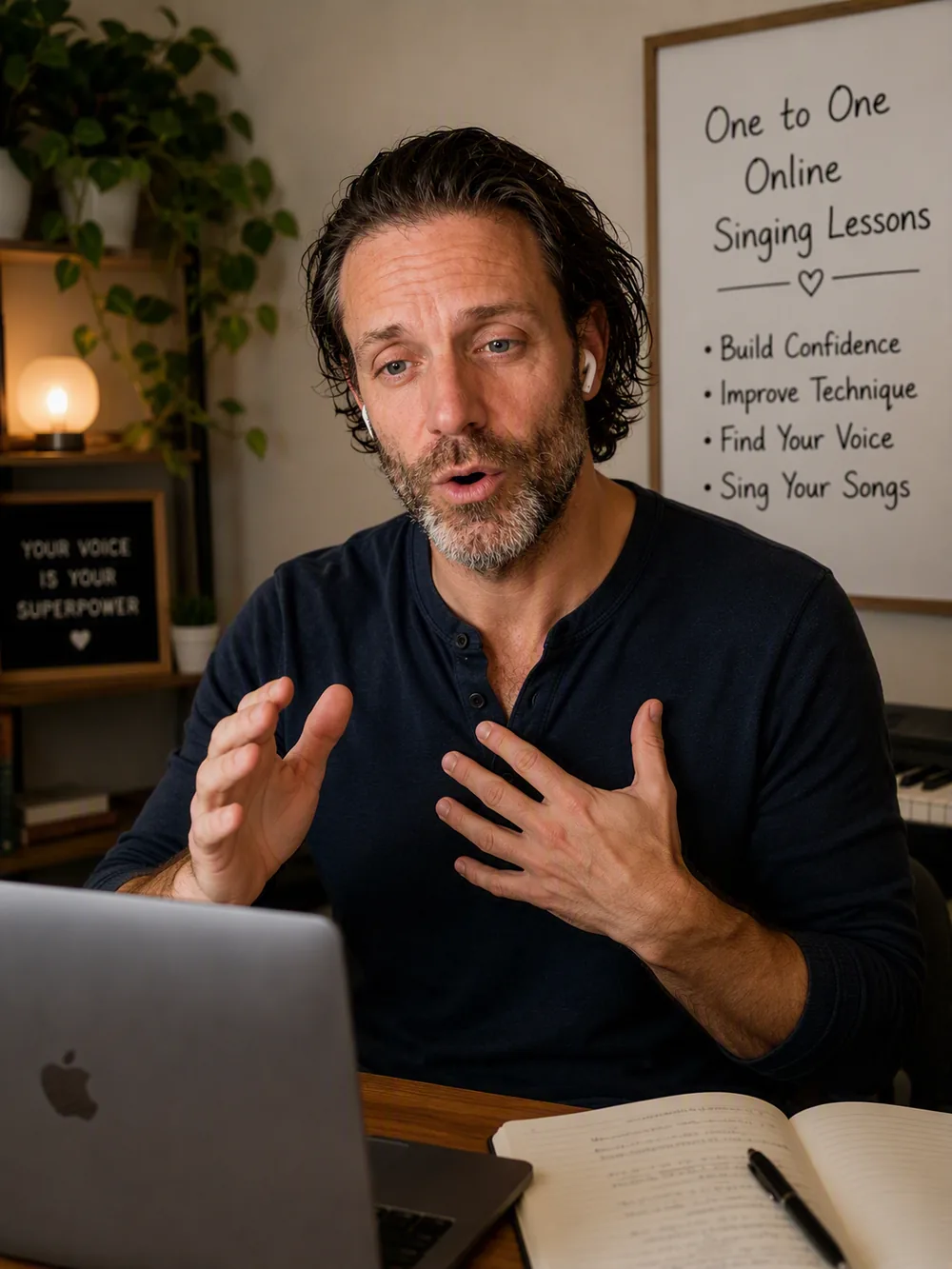
Coaching is delivered live on Microsoft Teams, which means I can work with an artist wherever they are and fit around a shooting or recording schedule. On location work can be discussed.
Single sessions are charged at the standard hourly rate. Project work, tour preparation and anything involving a production schedule is quoted individually, because it depends entirely on the timeline and what is actually needed.
References are available privately on request.