Vocal Agility in Contemporary Songs
A fast run can feel unclear for different reasons: unfamiliar notes, word articulation, timing or a change in vocal coordination. Slowing it down helps you hear which part needs attention.
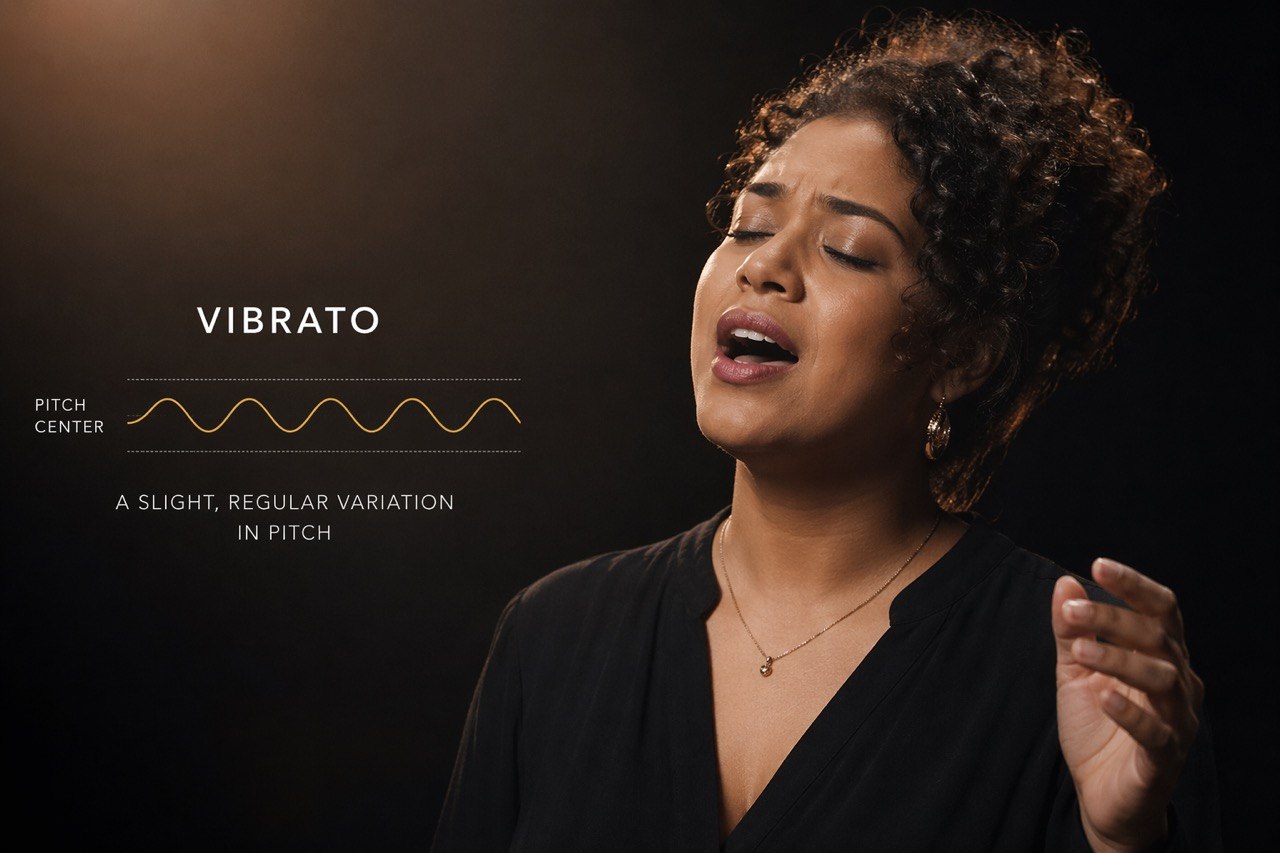
Fast is not the same as clear
Agility in a contemporary song means that a sequence of notes, words and rhythmic events remains intelligible and musically placed. A singer can move quickly yet blur the pitches, rush the beat or lose the lyric. Conversely, a slower, clearly shaped phrase may carry the intended character better than a display of speed. The useful question is not “How fast can I sing?” but “What has to stay distinct in this phrase at the song’s actual tempo?”
Listen for what becomes unclear: are the pitches merging, are consonants late, does the first note start inaccurately, or does the phrase land outside the groove? Those are different observations. A recording at a reduced speed may reveal the sequence, but it can also change the feel and give extra time for articulation. Returning to the original tempo is essential before deciding whether a change transfers.
Test the sequence in its musical setting
Take Ariana Grande’s “Into You” as a contemporary pop example. A coach might focus on a short melodic turn in the singer’s selected key, then listen with the actual accompaniment at the original groove. Are the note changes audible, do the words land in the beat, and does the phrase connect to the next line without a rushed breath? The exact arrangement matters: the studio lead may be layered, the backing track may emphasize a different subdivision, and a live band may use a different tempo. Practising against an assumed version can make an otherwise clear phrase feel unstable.
For a different rhythmic profile, a coach could look at the quick lyric delivery in Olivia Rodrigo’s “good 4 u”. The task may be less about a long run of separate pitches and more about crisp consonants, rhythmic placement and maintaining the melody amid a driving band. If the words become muddy, the singer might first speak the rhythm in time, then sing a brief excerpt with the melody, but that comparison is only a way to locate the issue. It is not a universal agility drill or proof of vocal coordination.
Distinguish pitch sequence from articulation
When a run sounds like a blur, identify which part is unclear. If the contour is hard to hear even without words, check the reference notes and the accompaniment. If the melody is clear on a neutral syllable but loses definition with lyrics, consonant timing or vowel changes may be relevant. If the pitches and words are clear alone but drift with a track, the tempo, groove or monitor balance may be the variable. A tuner is not especially useful for judging a rapid sequence because it may lag or display transient readings; the ear and a recording of the musical context are more informative.
For a brief comparison, select only the bar or half-bar where clarity changes. Hear it at the track tempo, then slightly slower while keeping a recognisable pulse. Restore the original words and arrangement and listen again. If the slowed version is precise but the original is not, that identifies a tempo-dependent task; it does not mean that repeating the slow version indefinitely will solve it. If a consonant disrupts the sequence, the goal is to coordinate the text with the melody, not remove all diction to maximise speed.
Use tempo, key and recording context honestly
Confirm the key and arrangement first. A karaoke version can differ from the official release in tempo, melody or backing parts. A live recording might include a run not present in the album version. A small tempo shift can change both articulation time and groove; a transposition can make the same pattern feel different. For a cover, agree with a band or track operator on the exact arrangement rather than trying to compensate mid-phrase.
In a recording session, edit points and vocal layers can make a rapid line sound more exact than one uninterrupted live take. Do not use the polished master as the only realistic comparison. A close microphone may capture consonants differently from a room recording; a dense monitor mix may mask the notes. Set a clear vocal and guide balance. At rehearsal, ask for a count-in and tempo that match the planned performance. The objective is a phrase you can deliver intentionally in context, not a maximum-speed test.
Articulation can be especially deceptive in pop. A consonant may be intentionally softened in one style, but the vowel sequence and rhythm still need to communicate the melody. A coach can listen for whether the consonant lands before or on the beat, whether the vowel arrives in time for the pitch, and whether the backing track doubles or obscures the line. Those observations help distinguish a diction choice from a note-sequence problem. They do not establish that one accent or articulation style is correct for every singer.
Make precision audible before adding speed
Choose one passage, define what needs to remain clear, and make a short comparison at the intended tempo and a slower musical tempo. Change only one factor—words, key, accompaniment or speed—so you can hear what matters. Keep the work brief, restore the original phrase, and judge it against the song’s groove. If the phrase becomes uncomfortable, stop. There is no prescribed number of repetitions or guaranteed rate of progress that applies to everyone.
Bring the exact recording or track to a coach if you want to examine timing, text or sequence choices. For broader context, see pitch and reference in a song, repeatability under changed conditions and letting rhythmic detail serve the text. Agility should clarify the music, not replace it.
Work on a quick phrase
Bring a phrase from your repertoire to a paid Consultation to discuss what to test in the music. It is £25 for 30 minutes, not a free trial or quick-result promise.
Request a Consultation